
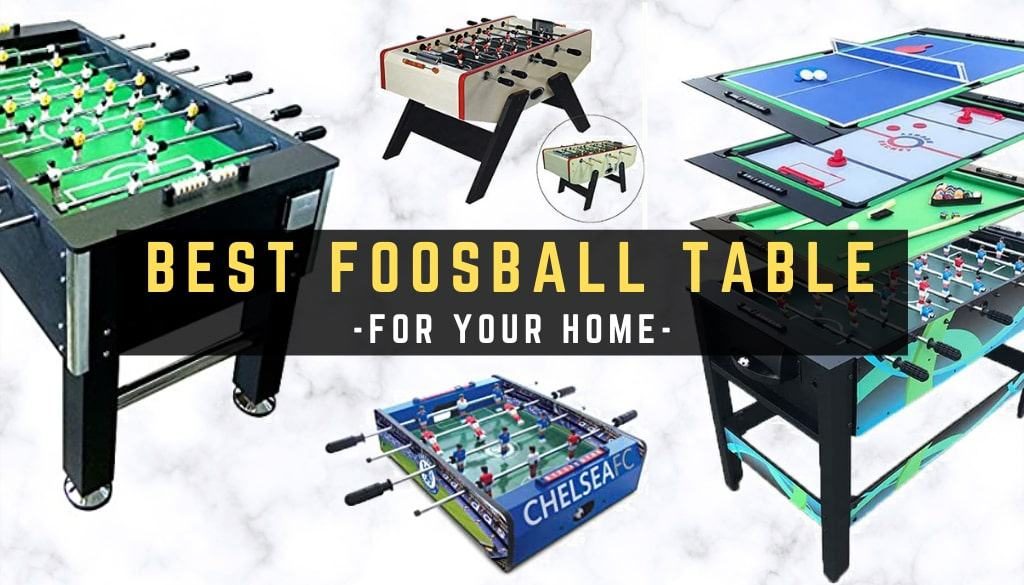
How to Choose the Best Foosball Table for Your Home?
Do you want to enjoy playing your manipulated games, especially soccer, in your home?
The games are played on a foosball table, where players usually use a tabletop game based mainly on association soccer or other games.
To enjoy the game, you will need to move a ball to the opponent’s goals using certain manipulated rods following specific rules.
However, the rules of the games will vary from state to state.
This article outlines the different varieties of these tables and the factors to consider before buying the right option for your home.
What are the different types of foosball tables?
Stand Alone. The main feature of this type of table is standing on its own as it comes with the legs already attached.
The more oversized table takes too much space, and it’s more expensive than the others.
However, it provides an authentic play, and it’s usually long-lasting.
It is ideally better for use by all age categories, including; adults, teenagers, and old aged people.
However, these people must be able to play the game competitively.

No products found.
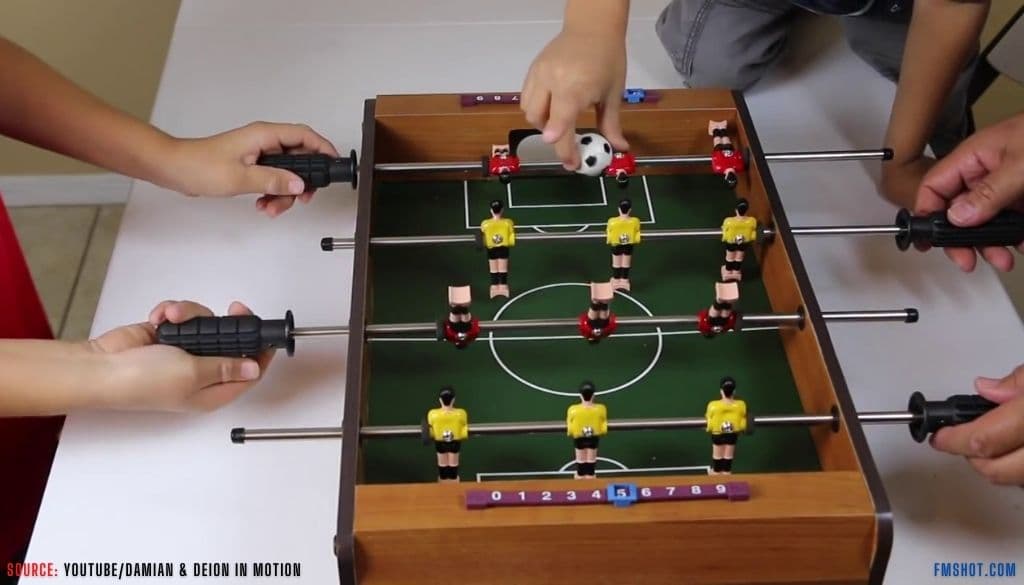
Tabletop. This type of table is designed to sit on top of a surface for you to enjoy your game. Therefore, the surface must be sturdy.
The table is smaller and easier to move to any place in your home where you want to enjoy your game.
Some of them are made from either plastic or wood.
They are ideal for children or beginners who want to learn or test their skills in the games.
You don’t need a lot of funds to purchase the tables.
No products found.
Multi-game. The multi-game is a table that you can easily convert for other games like table tennis, bowling, air hockey, and even shuffleboard.
It’s the best efficient for your less space as the construction requires less space.
Also, the table is advantageous if you’ve children who like to play different kinds of games.
The conversion will involve replacing the rods with other rods for the particular game you want to play.
No products found.
5 things to consider before buying a foosball table
Table Size and Space: Evaluate the available space in your home or game room.
Foosball tables come in various sizes, typically ranging from 48 to 56 inches in length.
Ensure you have enough room not only for the table itself but also for players to move around comfortably.
Quality of Construction: Look for tables made from sturdy materials such as solid wood or high-quality MDF.
The durability of the legs, playing surface, and rods will affect the table’s longevity and gameplay experience.
Player Skill Level: Choose a table that suits the skill level of the intended players.
Casual players may enjoy a more affordable, beginner-friendly model, while serious players may want a professional-grade table with advanced features and finer details.
Rod Type: Consider whether you prefer telescoping or solid rods.
Telescoping rods are safer for younger players, as they retract within the table, while solid rods offer a more traditional and responsive gameplay experience.
Budget and Features: Determine your budget and assess the features that are important to you, such as adjustable legs, built-in scoring systems, and ball return mechanisms.
More expensive tables often come with additional features that enhance gameplay, but it’s essential to find a balance between quality and affordability.
| Feature / Consideration | Why It Matters | What to Look / Ask |
|---|---|---|
| Intended use & user level | A table for casual play (family, recreational) has different needs than one for competitive training. | How often do you expect to play? Are you aiming for tournament-level play someday? |
| Size & space / clearance | Even a “compact” full-size table is large. You must leave clearance around it so players can move rods without bumping walls or furniture. | Measure the room: leave ~3 ft (or more) on each long side, and enough space at the ends for scoring and movement. |
| Construction & stability | A flimsy table will wobble during play, spoiling the experience. Better tables use solid frames, reinforced legs, crossbeams, levelers, etc. | Legs should be thick and stable; check for crossbracing; adjustable leg levelers are a big plus. |
| Rods (solid vs hollow vs telescopic) | The rods are your “control link” to the players. Solid rods are rigid and durable but heavy; hollow rods are lighter but may flex; telescopic rods (which retract) add safety (especially with kids) and reduce risk of injury. | Prefer rods that slide smoothly, feel responsive, and are well supported (good bearings). If kids are around, telescopic rods are safer. |
| Player figures & configuration | The design, size, balance, and material of the “men” affect control and play style. Some tables use counterbalanced players (they stay horizontal when neutral). | Check how securely players are mounted. Are they metal, plastic, or composite? Do they offer good ball control? |
| Goalies (1 vs 3) & game style | Some tables use a single goalie, others use three goalies across the rod. This affects difficulty, game dynamics, and preferred style. | Which configuration would you prefer (defense challenge vs offense)? |
| Playing surface / field | A level, smooth surface ensures consistent ball behavior. Materials like tempered-glass, heavy laminate, or high-quality composite are better than cheap surfaces. | Roll a ball; see whether it rolls straight consistently. Check for warping or unevenness. |
| Accessories & extras | Built-in score counters, cup holders, ball return mechanisms, leg levelers, protective edges, and ball types all add convenience and quality. | See which extras are included (or optional). |
| Brand reputation / warranty / parts availability | A strong brand means better support, availability of spare parts (rods, handles, players, balls), and durability. | Look up reviews, ask about replacement parts, check warranty duration. |
| Budget & value trade-offs | A strong brand means better support, availability of spare parts (rods, handles, players, balls), and durability. | Look up reviews, ask about replacement parts, check warranty duration. |
| Budget & value trade-offs | Foosball tables span from budget “fun” models to serious, tournament-quality ones. Too cheap a table will show its weaknesses fast. | Allocate enough budget for a solid mid-tier model rather than the cheapest you find. |
| Assembly, delivery & weight | Many tables arrive partly disassembled and heavy. You’ll need help, tools, and clear access to the room. | Plan the route (doorways, stairs), ask whether they deliver fully assembled or semi. |
| Style / aesthetic / design | Especially if your foosball table will be in a visible part of your home, its look matters. Many tables are available in different finishes or themes. | Choose a finish that complements your décor. |
No products found.
Common Pitfalls and Mistakes to Avoid
Ignoring room clearance — you may find you can’t comfortably swing rods.
Underestimating the importance of a level surface — uneven tables lead to unfair play.
Choosing a rod style (e.g. hollow) just because it’s cheaper, without considering bending or flex.
Overlooking spare parts — a broken rod or player figure without replacement options makes the table less usable.
Not checking return or warranty policy — once installed or used, returning a foosball table can be a hassle.
Steps to Use When You’re Ready to Buy
Measure your space, leaving clearance for all sides.
Decide your target level (casual vs advanced) and set a realistic budget.
Shortlist a few makes/models that match your specs.
Test in person if possible — feel rod action, surface consistency, etc.
Check parts & support (do they sell replacement rods, men, handles?).
Plan assembly and delivery carefully (weight, tools, manpower).
When it arrives, level it (leg adjusters, shims) and test with a few matches.
No products found.
Conclusion
Foosball table provides the best experience of playing manipulated football and other games in the comfort of your home.
Therefore before purchasing or choosing, you need to consider various factors to get the right table.
The factors discussed above will help you get the right one that will suit your needs.
Author: Alen Stefanovic Topic: Foosball Table UK